12.10.2007

Do you have any hope at all in humanity?

I haven't read any of Stephen King's books or stories, but I have learned two things from his movies. He possesses phenomenal insight into the human mind, and he is a freak. The Mist proves both points fully with a simple story: a mist engulfs a small New England town, and a few dozen of its denizens are isolated in a grocery store, forced to deal with enemies both outside and inside the store, both strange and familiar.

The best and brilliant parts of The Mist are the explorations into the psyche of the various trapped townsfolk. If someone's character is truly exposed when under pressure, then the extreme circumstances of this movie strip souls down to their essences, with frightening results. There are heroes and villains, leaders and followers, stalwarts and cowards. In previous uses of King's source material, writer/director Frank Darabont burrowed into the heart of hope in The Shawshank Redemption and delved into faith and the supernatural with The Green Mile. Both movies placed normal people into extreme circumstances, and did so exceptionally well. In that general thematic regard, Mist is similar to those two excellent films. More specifically though, it varies greatly, stressing the negative aspects of humanity rather than positive traits. Along the way, plenty of complex issues arise, and they are most frequently addressed with a rough, dull blade that gashes boldly through the moral fiber of civilization. The results are rarely pretty, but always compelling.

Lest you think this is a philosophical art house movie, let it be known that as a horror flick, independent of any deeper meaning, Mist consistently entertains, with a handful of superb knuckle-whitening scenes enhanced by an excellent cast. But a dark decision in the final act makes it impossible for even the most casual moviegoer to completely ignore the thick subtext of King and Darabont.

What prevents The Mist from being a great movie is the frayed nature of that subtext. While the story is rife with interesting points, the commentary fails to coagulate into a comprehensible bigger picture. In a sense though, the fractured themes better befit such a moody picture, one that strikes its audience at many levels, leaving the mind spinning in a mist of its own.

Bottom Line: 7 of 10 for a movie far smarter and deeper than the glut of recent horror releases.

12.05.2007

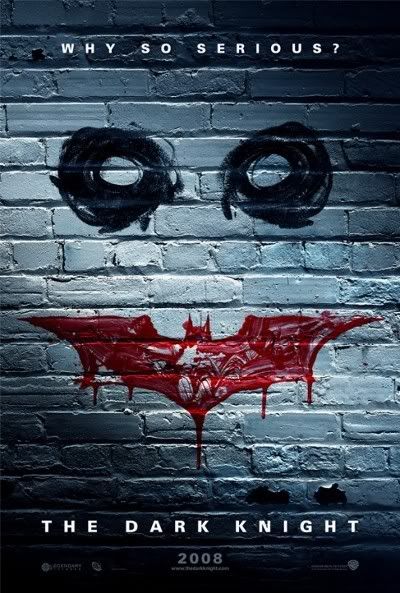
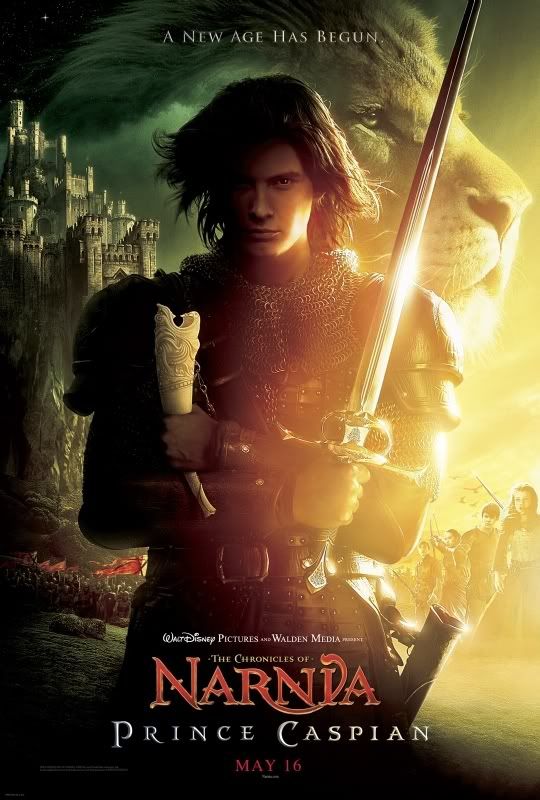
A darker movie and a Dark Knight.

1) Prince Caspian trailer. May 16th, 2008. I'm stoked.

2) The Dark Knight. July 18th, 2008. I'm stoked.


11.07.2007

Gone Baby Gone.

As I am federally mandated to point out, Gone Baby Gone is the directorial debut of Ben Affleck, a fact that is impossible to overlook while watching the movie. Sometimes I wish I could watch a movie while completely ignorant of its director, but that's another post. Anyway, Affleck clearly cares about this crime drama, both in content and location, and his loving fingerprints mark the film with a unique raw edge.

For a multitude of reasons, Gone Baby Gone can succicntly be described as a light version of Mystic River, which was likewise based on a Dennis Lehane novel. The subject matter is equally heavy and thick, also exploring family dynamics through a painful crime involving a child. Both movies are set in Boston, and the one thing that Gone does better, largely due to Affleck's devotion to his hometown, is capture the seedy bizarreness of the local culture. Beyond that, Gone trails River in every aspect, not to an extent that makes Gone a poor film, but merely a decent one that does not remotely reach the great heights Clint Eastwood achieved four years ago.

First, the story itself is weaker and more transparent, due in slight part to a bit of foreshadowing. The moral waters here are equally murky, but shallower once fully explored. Secondly, the cast is weaker; that's not so much a swipe at a solid troupe includes the always good Morgan Freeman and Ed Harris, but rather reminds how loaded River was with proven, veteran talent (Penn, Robbins, Bacon, Fishbourne, Linney, Harden). The younger faces here, like Casey Affleck, Michelle Monaghan, and (especially) Amy Ryan, acquit themselves well, but they do not possess the gravitas that can make such a film so much better. They are simply in a different league, the NFC versus River's superior AFC. Similarly, Affleck's movie sports an effective rough look and a less effective uneven flow, as opposed to the smooth and polished texture of Eastwood fluid masterpiece. For a first film though, Affleck's end product is impressive and worth watching for fans of the genre.

Bottom Line: Always decent, sometimes quite good, but it's nowhere near Mystic River. 7 out of 10.

11.01.2007

The Kingdom.

I'm not going to get a full review written for The Kingdom, so these condensed thoughts will have to suffice. (Insert joke about time, marriage, etc.)

As the season has shifted from summer to fall, so too shifts the tone of cinema, from a noisy, adrenaline-infused summer to a dramatic, Oscar-contending autumn. Bridging that gap skillfully is a contemporary action-drama set in the divergent cultures of Washington, D.C. and Saudi Arabia, the latter of which is known by natives as The Kingdom. A team of FBI agents are thrust into this foreign world when something goes horribly wrong, and the movie tells that story with a facility that nearly minimizes the film's quality.

What Kingdom does extremely well is create a realistic world with well-rounded characters. The movie reveals strengths and flaws of the good guys and the bad guys, whether they're American or Arabian. It also offers a (to my knowledge) solid representation of the Arab world and presents their point of view in a fair and reasonable manner. Aided by docu-style cameras and a sandy color palette, Kingdom adds multiple moments of white-knuckle tension, with and without action, that rival anything put on screen in recent years. The lead actors are all solid and likable, and threads of humor and casual music run through the film, preventing it from becoming overbearing as it promotes pensiveness. This is one of the best action-dramas of this decade.

Bottom Line: Assuredly among the year's best films. 8 of 10.

9.18.2007

Whoa...


Sort of looks like Anakin. I hope he's less petulant.

8.04.2007

I remember everything.

One of better movie series of the last decades possibly concludes with the release of The Bourne Ultimatum, the third movie that follows super-secret spy/assassin Jason Bourne as he attempts to track down his past against the wishes of the United States government that trained him. The original, The Bourne Identity, was one of the best pure action movie in recent years. The sequel, 2004's Bourne Supremacy, was unsure and not quite as polished, but still solid. Now comes the series third installment, which just about wraps up the summer movie season.

The storyline follows a natural progression from the previous two movies. Now that Bourne has figured out who he is now and atoned somewhat for his sins, he wants to know who he was. In order to do that, he must race the government to various people who know the secrets behind his black-ops work.

Few cinematic characters are as perfect for action movies as Jason Bourne, from both an action and narrative standpoint. As he learns his past, he takes the audience along for the ride. But that process is not tedious backstory or mediocre character development, as is often the case in such movies. Instead, his quest is the story, which makes for a rapid-fire flick that simultaneously entertains and enlightens. Matt Damon's determined yet understated demeanor is ideal for the role, and the no-frills approach never distracts from a driving story that is filled with plenty of high-tech action.

In a lesser movie, the technological implausibilities might weaken the movie or distract from the storyline. But Ultimatum dodged that bullet in two ways. First, the story moves quickly enough that the viewer barely has time to think about what might or might not work before the flick is on to the next frenetic sequence. Secondly, the movie does not use the technology as a dominant point of the movie, like Enemy of the State. Instead the devices are merely a means to an end.

Also overshadowing the technology is another strong supporting cast. The always-good Joan Allen returns this time, joined by Scott Glenn and David Straithairn, from Good Night and Good Luck. Strathairn and Allen are compelling in every scene, particularly when they are together. Their exchanges crackle without flying over the top, and their restrained focus is as intense as any shouting match. They add a layer of gravity to the goings-on that separates Ultimatum from other summer action like Live Free or Die Hard.

Other differences between this and Die Hard lie in the technical aspects of the film. Director Paul Greengrass also helmed Supremacy, and he and his crew remedied one of the main problems of the second movie, which was the overly shaky camera work. Most of the shots are still handheld, but they are more static than before and pulled back a little in the fights. The music is surprisingly good too. As Bourne trots through Europe and Africa, the music travels along, mixing in pulsing strings, African drums, and even going completely silent when appropriate.

Ultimatum often echoes Identity, which is a good thing. Both possess a similar driving intensity interspersed with quiet moments that allow humanity to leak through. This one lacks the originality of Identity, but replaces it with the satisfying resolution that Bourne is seeking. On the whole, as the summer movie season wraps up, this is the best action film of the last few months. It's better than Die Hard, although it doesn't provide as much fun. It's a better film; Die Hard is a better movie, if that makes sense.

Bottom Line: Better than the second; not quite as good as the original, but still a bang-up way to end the summer movie season. A slightly generous 8 of 10.

8.02.2007

Oh, I'm detecting nuttiness alright.

Ratatouille is the latest computer-animated release from Pixar, the company that has produced the best animated films over the last decade. The odd title is the name of vegetable stew and doubles as a pun on the main character, a rat named Remy. (Audio review here.)

Remy is no ordinary rat though. He resides in France amidst a colony that lives as rats do, thriving on the garbage and remnants of others, Remy is the exception because he has a finely-honed sense of smell and loves cooking. Through a series of fortunate events, Remy finds himself in Paris at a fine restaurant, where he learns how to interact with a kitchen boy named Linguini to create magnificent meals. Things of course get complicated, as Remy attempts to balance his passion with his family, and Linguini must handle being a celebrity through no talent of his own, while dealing with a sinister restaurant critic.

Like all of Pixar’s work, Ratatouille looks phenomenal. The rats in particular look good, with fine detail paid to fur in various states. The humans are not the most hyper-realistic creations seen on screen, but neither are they intended to be. This is a cartoon, and the artists seem to know that, because most of the characters border on caricature. The slimy French chef is ridiculously short and sports a pencil-line mustache. The critic has long and angular features that scream evil. Even though the movie is made with the most modern of technology, it is a throwback to the classic days of Disney and Looney Tunes, when merely a glance at a character would explain everything about a character. The bad guys look bad; the good guys are goofy but likable, and the gray characters share attributes of both, leaving the viewer guessing for a while.

One thing that separates Ratatouille from most of its Pixar brethren is the pervasive kinetic energy. Plenty of other movies, like Cars and The Incredibles, were drenched with action and movement, but it feels different here because the scope of the movie is centered on a rat. When you watch Remy race through a kitchen or up a building from close-up, it feels much wilder and more dangerous than watching a human make the same thirty-foot trek, which is appropriate since it is more hazardous for a rat to make that trip.

The question about all Pixar movies is twofold: how well does it play with kids, and how well does it play with adults? I suspect that Ratatouille may not be as accessible to kids as most of the rest of the Pixar library, because many of the characters are rats. Rodents are not as marketable or over-the-top memorable as a giant furry blue monster or an innocent little clown fish. Nor is the story quite as simple as some others. But the pace is brisk enough, and the story is understandable enough, thanks in large part to the brilliant animation, that kids should still enjoy the movie. Adults should enjoy it too, with the fine images, clever humor, and various twists and turns of the story. On the whole, Ratatouille is not as memorable as Finding Nemo or either Toy Story, but it is good enough to be tucked right behind them with Monster's Inc.

Bottom Line: 7 of 10 for the best family film of the summer. What the heck, call it 8 of 10.